


MyGrowth: Daily Micro Learning
4.2176.00 Reviews
App Specs
- Version
- 1.13.1
- Updated On
- License
- Free
- Downloads
- 100,000+
- Developer
- Extramile Limited
- Categories
- Education
- Platform
- Android
Screenshots
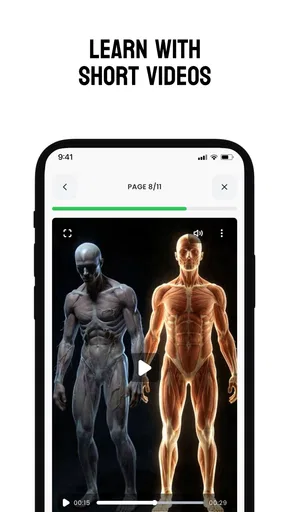
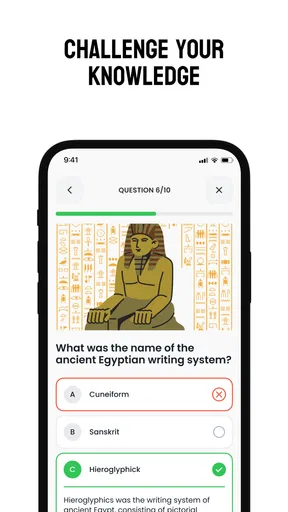
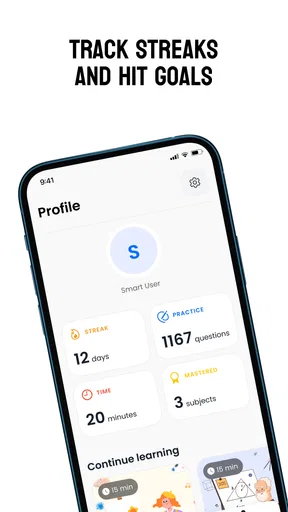
 Analysis by AppCompare
I approached MyGrowth: Daily Micro Learning as a small daily study tool rather than a replacement for a full course. That distinction matters. The app is built around short learning moments for adults, so its appeal is not an enormous library or a long academic pathway. It is the chance to turn spare minutes into a repeatable habit. In my experience, that makes it most useful when I treat it as a prompt to learn, reflect, and return tomorrow—not as a complete answer to a subject.
MyGrowth comes from Extramile Limited and sits in the education category. It is free to start, has an Everyone age rating, and its current version is 1.13.1. The app has reached over 100 thousand installs and holds a 4.2 average from around 2 thousand ratings, which suggests a healthy level of interest without making it sound universally perfect. I also noticed that optional purchases range from $0.99 to $69.99 per item, so I would explore the free experience carefully before paying for anything.
How MyGrowth fits into an everyday learning routine
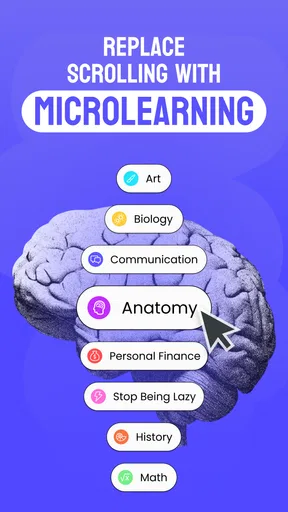
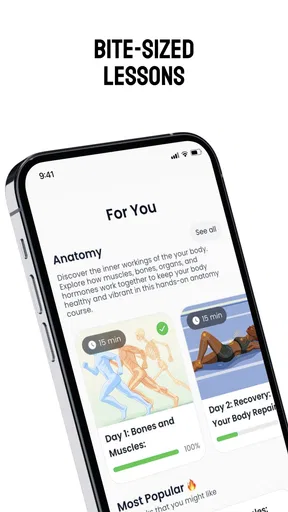
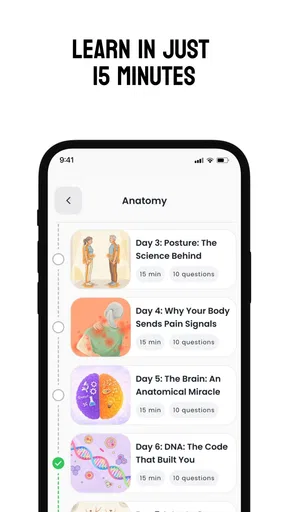
The strongest idea here is scale. A short lesson feels easier to begin than a chapter, lecture, or formal course. I can imagine opening it while waiting for a meeting, during a commute, or after dinner when I want something more useful than another few minutes of scrolling. The bite-sized format lowers the mental barrier, particularly on days when I have enough energy to learn but not enough patience for a demanding study session.
That convenience also creates the app’s main challenge: a small lesson can create awareness without creating mastery. If I want to become competent in a technical subject, prepare for an exam, or build a professional skill from the ground up, I would still need structured material, practice, feedback, and a way to measure progress. MyGrowth makes more sense as the front door to learning or as a daily refresher than as the whole house.
A realistic routine would be to use it during a predictable pause rather than waiting for motivation. For example, I might open it with my morning coffee, complete one short learning activity, and write down one idea that deserves deeper attention later. The useful step is not merely finishing the lesson; it is connecting the lesson to a question, task, or conversation in the same day. That turns passive consumption into a modest but more durable learning loop.
Where the network becomes part of the experience
Because this is a mobile learning app, connectivity can shape how smoothly that routine works. When the connection is stable, the experience should feel naturally suited to quick sessions: open the app, receive the current learning material, and continue without setting aside a long block of time. That is the ideal moment for MyGrowth, especially when I am at home, in a workplace with reliable internet, or using a dependable mobile connection.
The experience is less predictable in places where service changes from one moment to the next. A train journey, crowded public venue, underground area, or rural road can turn a supposedly effortless lesson into a pause while content loads or the app tries to continue. I would not plan an important study session around it immediately before leaving reliable coverage. For a casual learning habit, a short interruption is annoying; for a time-sensitive course, it can be a serious drawback.
Worth Reading Before You Choose

EA SPORTS FC Mobile 26 Is a Bigger Football Game, but It Takes Time

Flipboard Shows What News Apps Must Do Beyond the Feed

Switching to Android Auto Means Rethinking Your Driving Routine

Google Calendar Makes a Crowded Week Easier to Manage

Ludo King Makes the Most of the Minutes Between Plans

Baby Panda World Brings Quick Play to Modern Phones, but Its Game Library Feels Busy
This is also why I would test the app in the places where I actually intend to use it. An app that feels quick on home Wi-Fi may behave differently on mobile data or a weak public network. The important question is not whether it works in perfect conditions, but whether its opening, lesson delivery, and return to the learning flow remain comfortable during ordinary travel and short breaks.
I would also avoid assuming that a lesson is available without a connection simply because the format is short. The app’s compact design does not automatically tell me how content is stored or refreshed. If I need dependable access away from the internet, I would check the app’s own current behavior before building a routine around it, rather than discovering the limitation during a flight or a long trip.
Using it well in short mobile contexts
MyGrowth is better suited to a phone-sized attention window than to a desk-based study block. That is a strength when I have five spare minutes, but it can become a weakness if I expect deep concentration from a small screen surrounded by notifications. I would use it in a place where I can finish the lesson without constantly switching to messages, social media, or work.
One practical approach is to assign different contexts different jobs. I might use the app for discovery during a commute, then move the most interesting topic into a notebook, a longer article, or a hands-on exercise at home. This prevents the microlearning format from becoming a collection of disconnected facts. It also gives me a simple test: if a lesson never changes what I read, ask, or do afterward, I may be consuming it too passively.
The phone format is particularly appealing for adults returning to learning after a long break. There is less ceremony than opening a textbook or enrolling in a lengthy program. A person who feels intimidated by formal education can begin with a small commitment and decide whether the subject deserves more time. I would recommend that approach to someone rebuilding confidence, provided they understand that comfort and completeness are different things.
On the other hand, I would be cautious about using it while walking, driving, or handling anything that requires attention. Bite-sized content can encourage the mistaken idea that every spare second should become a learning opportunity. I find the app more valuable when I give it a focused pause, even if that pause is brief, rather than trying to absorb material in unsafe or highly distracting situations.
What happens when a session fails or gets interrupted
Connectivity is only one possible source of friction. A phone call, a low battery, an accidental swipe, or a sudden change of location can interrupt a short lesson. In a longer course, losing a few minutes may be manageable; in a tiny session, an interruption can consume most of the available time. I would therefore avoid opening MyGrowth when I have only a few seconds before an appointment or boarding announcement.
My recovery habit would be simple: return to the app when I have a stable connection, check where the lesson leaves me, and avoid assuming that a partially viewed item has been fully absorbed. If the app resumes cleanly, that makes the daily habit easier. If I need to reconstruct what I was doing, I would treat the session as incomplete and start again when I can pay attention. That may feel inefficient, but it is better than counting a disrupted glance as meaningful learning.
For anyone considering a subscription-like purchase or several individual purchases, I would first observe how well the app fits their real schedule. A free start removes much of the initial risk, while the wide range of optional item prices means the long-term cost deserves attention. I would not buy simply because a lesson was interesting. I would buy only after confirming that I return often enough and that the paid material supports a clear learning goal.
The same principle applies to progress. A daily streak can be motivating, but it should not become the only measure of success. If an interruption breaks the rhythm, I would restart without trying to compensate by rushing through several lessons. The purpose of the app is to make learning more approachable, and an overly rigid routine can undermine that benefit.
Keeping mobile data and attention under control
For data-conscious users, the sensible approach is to use MyGrowth deliberately rather than leave it open whenever a spare moment appears. I would prefer a known Wi-Fi environment for regular sessions until I understand how much content the app retrieves. On mobile data, I would keep sessions intentional and avoid repeatedly opening and closing the app just to check whether something new is available.
This is not only about cellular usage. Attention is another limited resource. A microlearning app can be healthier than an endless social feed because it gives a session a clearer purpose, but it can still become another habit of checking the phone. I would set a modest target, such as one focused session, then stop. The app works best when it replaces a small amount of unplanned scrolling, not when it adds another stream of notifications and interruptions.
It is worth remembering that “free” refers to the starting price, not necessarily every part of the experience. MyGrowth is free to download and use at the entry level, while in-app items can cost from $0.99 up to $69.99. I would read each purchase screen carefully, consider whether the content matches my goal, and avoid treating a low-cost first purchase as proof that a larger commitment will be worthwhile.
Another useful tactic is to keep a tiny record outside the app: one sentence about what I learned and one question I still have. This costs no extra data and reveals whether the lessons are producing usable understanding. After a week or two, I can look back and see whether the material connects into themes or remains a series of isolated facts. That is a more meaningful test of value than simply opening the app every day.
Who should choose it, and who should look elsewhere
I would recommend MyGrowth to adults who want a gentle entry point into regular learning, people with unpredictable schedules, and curious users who enjoy sampling ideas before committing to a deeper resource. It is also a reasonable choice for someone who wants a compact educational activity during a break and can provide a reliable connection when needed.
I would be less enthusiastic for students who need a defined syllabus, revision tools, detailed explanations, or exam preparation. A dedicated course platform, textbook, tutor, or subject-specific practice app would usually be better for those needs. The same applies to professionals seeking a credential or a measurable training pathway. MyGrowth may help them discover topics, but discovery is not the same as verified competence.
Compared with podcasts and educational videos, the app’s advantage is the smaller commitment. Compared with books and full courses, its advantage is accessibility rather than depth. Compared with social media, it offers a more intentional reason to open the phone, although the quality of the habit still depends on how actively I engage. I would choose it when I need a nudge to learn, not when I need a complete curriculum.
The Everyone rating also makes it approachable for a broad audience, but that should not be confused with suitability for every learning objective. Adults have different levels of background knowledge, and a short lesson may feel too basic for one person while giving another a useful first foothold. I would judge it by whether the material meets my current level and whether it leads me toward further action.
My final view after weighing convenience against dependence
MyGrowth: Daily Micro Learning has a clear place in my phone: it is a low-friction education app for turning small pockets of time into regular exposure to new ideas. Its best quality is psychological. Starting feels manageable, and that matters for people who repeatedly postpone learning because traditional formats seem too demanding.
Its main limitation is equally clear. Short lessons do not remove the need for depth, practice, or reliable access. Network interruptions can weaken an already brief session, and the free starting point should not encourage careless spending on optional content. I would use it with a stable routine, a sensible data plan, and a habit of taking the most useful ideas beyond the screen.
Extramile Limited released the app on September 9, 2025, and the current version is 1.13.1. Those details make it a relatively new choice for this kind of learning, while its growing install base and 4.2 average show that it has already attracted a meaningful audience. My recommendation is positive but specific: try it if you want a convenient daily learning prompt and can accept that connectivity and brevity shape the experience. Skip it if you need a structured qualification, offline certainty, or intensive subject mastery. For the right user, the smartest way to use MyGrowth is as a starting point that turns curiosity into a repeatable habit.
Pros
- Short daily lessons make learning easy to fit into busy schedules.
- Covers a broad range of personal growth and practical topics.
- Simple interface keeps navigation focused and distraction-free.
- Small learning steps can help build a consistent daily habit.
- Useful for discovering new subjects without committing to lengthy courses.
Cons
- Some lessons may feel too basic for experienced learners.
- Daily content can become repetitive over extended use.
- Limited depth may require additional resources for complex topics.
- Progress tracking may not fully reflect real-world skill development.
- The subscription cost may not suit users seeking completely free learning.
FAQs for MyGrowth: Daily Micro Learning
What is MyGrowth: Daily Micro Learning, and how does it work?
MyGrowth: Daily Micro Learning is an educational app designed to help you learn through short, focused lessons. Instead of requiring long study sessions, it presents small pieces of content that can be completed during breaks or whenever you have a few spare minutes. The app is intended to make personal development more manageable by encouraging regular learning habits and gradual progress over time.
What subjects and types of content are available in MyGrowth?
The app focuses on bite-sized personal development and learning content, although the exact topics may vary depending on the current catalog and your selected interests. Lessons may cover areas such as productivity, mindset, communication, habits, and general self-improvement. Before downloading, users should review the in-app categories and description to confirm that the available subjects match their learning goals and expectations.
Is MyGrowth: Daily Micro Learning free to use?
MyGrowth may be available to download at no initial cost, but some lessons, features, or learning collections could require a subscription or in-app purchase. Pricing, trial periods, and available plans can differ between Android and iOS and may change over time. It is important to check the purchase screen carefully, especially the renewal terms, before starting a trial or confirming a subscription.
Can I use MyGrowth offline or do I need an internet connection?
An internet connection may be needed to download lessons, synchronize your progress, load updated content, and manage your account. Depending on the version of the app, some previously opened material might remain available temporarily for offline use, but this should not be assumed for every lesson. If you plan to study while traveling, test the desired content before leaving an area with reliable connectivity.
Is MyGrowth suitable for beginners, and can it replace a complete course or professional advice?
MyGrowth is generally suited to beginners and users who prefer simple, short learning sessions rather than intensive courses. Its micro-learning format can help introduce ideas and encourage consistent practice, but it should not be considered a complete replacement for structured education, expert coaching, therapy, medical guidance, or professional advice. Users should apply the information thoughtfully and seek qualified help when appropriate.


